


2.02 mm
σ ε E ν ρ τ G σy KIc ε̇ σu H

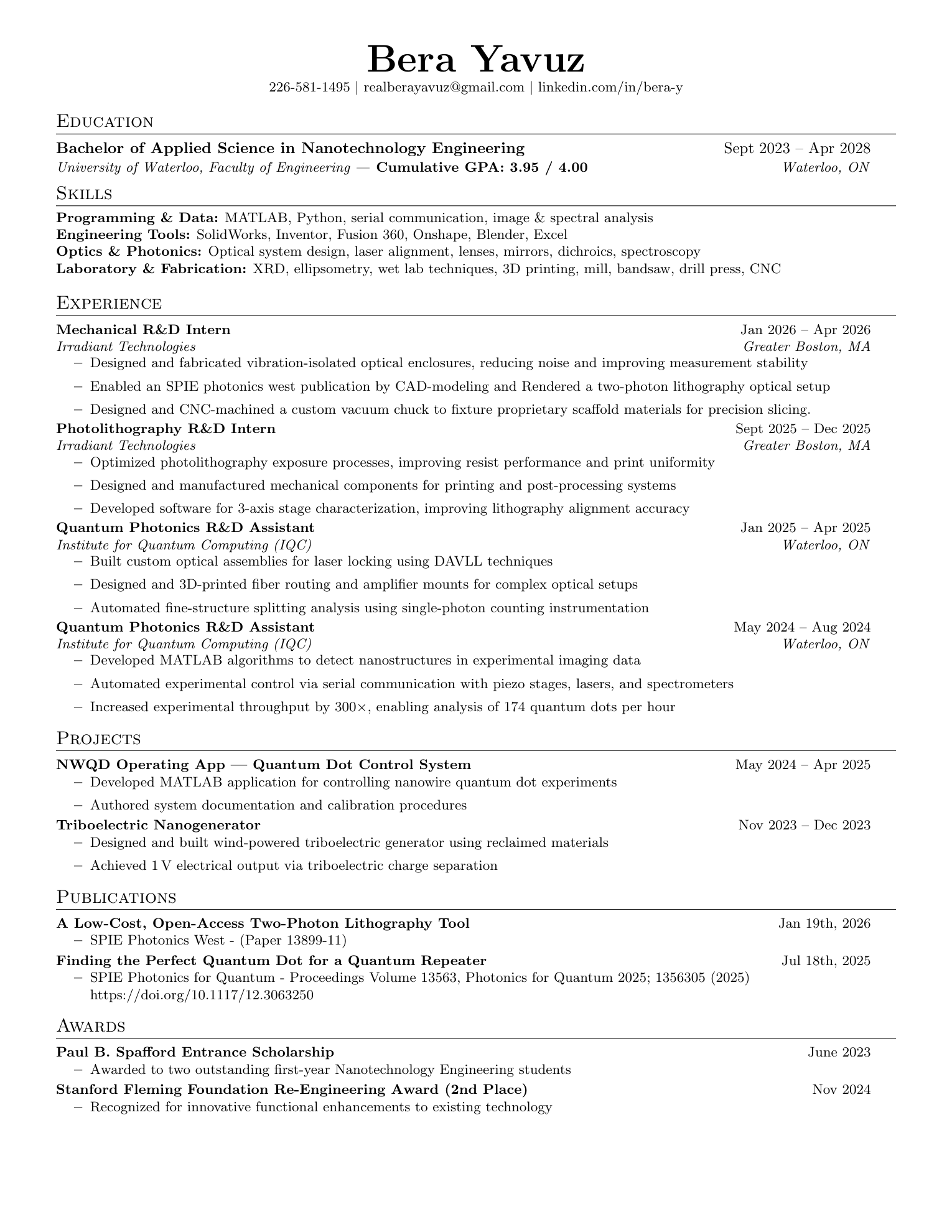
Bera Yavuz

Nanotechnology Engineering Student

University of Waterloo | Class of 2028

Last edited: loading… · Local time: loading…

SKILLS

CAD & Mechanical Design Engineering Automation CAM CNC Machining Precision Systems Fixture Design Laser & Optics Cross-Disciplinary R&D

I’m currently a Nanotechnology Engineering student at the University of Waterloo, with a growing specialization in mechanical design. While my academic background is rooted in nanotechnology, my hands-on experience is centered around building and working from real mechanical systems—from concept to fabrication.

I am currently working at Irradiant Technologies, where I began as a Photolithography R&D Intern and have since transitioned into a Mechanical R&D role. My work involves rapid prototyping, CNC machining, fixture design, and engineering automation, supporting the R&D development.

Previously, I conducted research at the Institute for Quantum Computing, where I worked on both the software and mechanical integration of automated quantum dot characterization systems, supporting scalable research toward quantum repeater technologies.

Bera Yavuz Bera Yavuz Bera Yavuz Bera Yavuz

About Me

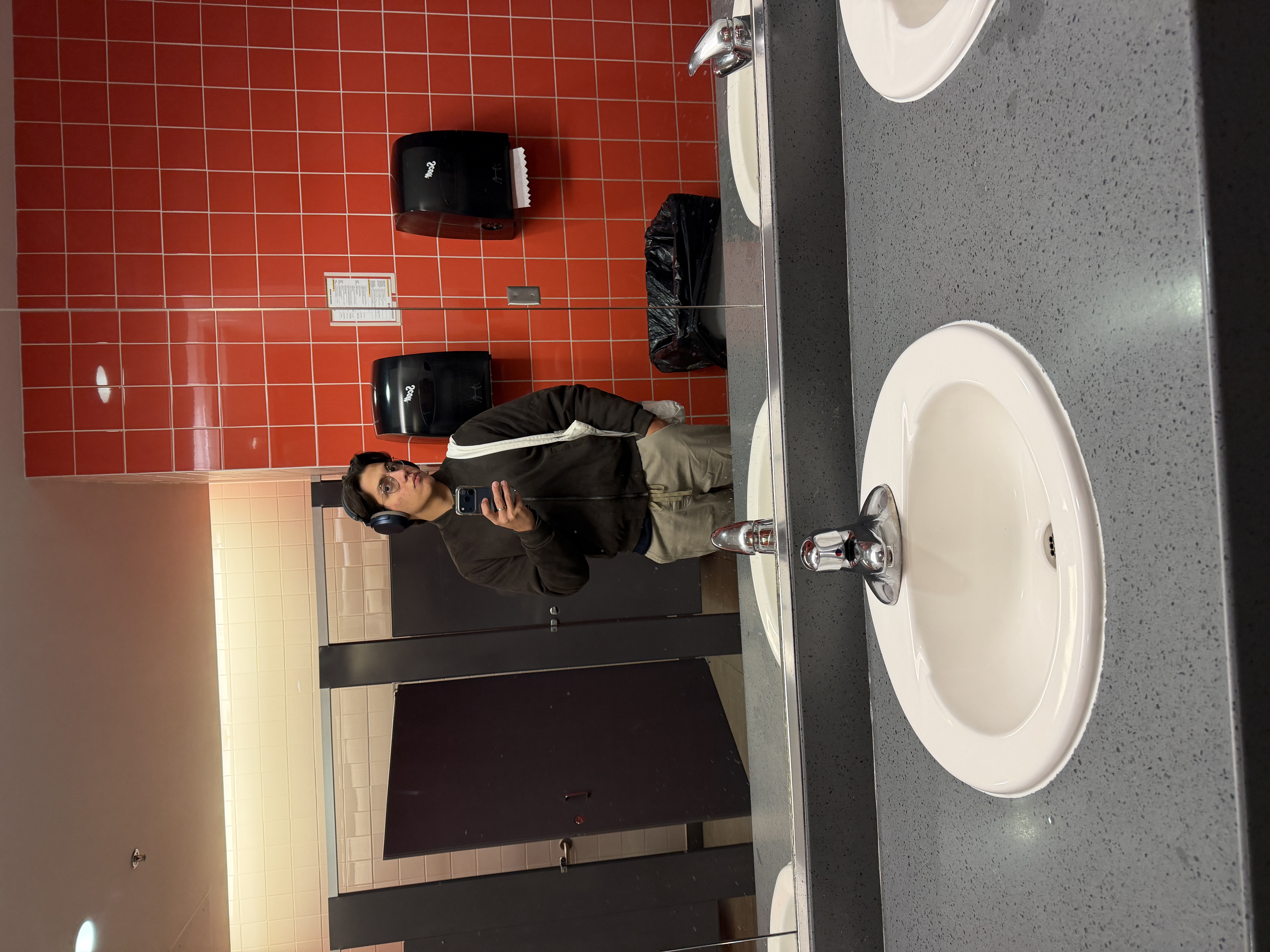
I’m Bera Yavuz, Emin is my middle name, but I rarely use it so Bera Yavuz will do. I was born and raised in the small city of Waterloo, Ontario, and I’ve basically been here my whole life. Whether for good or bad, as many people from UW will tell you. If you want the painfully precise version, I’ve been here for loading… (I love that flippin timer so much).

I’m currently a Nanotechnology Engineering student at the University of Waterloo, but my happy place is anything involving mechanical design, prototyping, and turning ideas into real parts that I can fidget with until I get bored. I bought myself a 3D printer, an unreasonably expensive caliper, and I’m trying very hard not to impulse-buy a desktop CNC next.

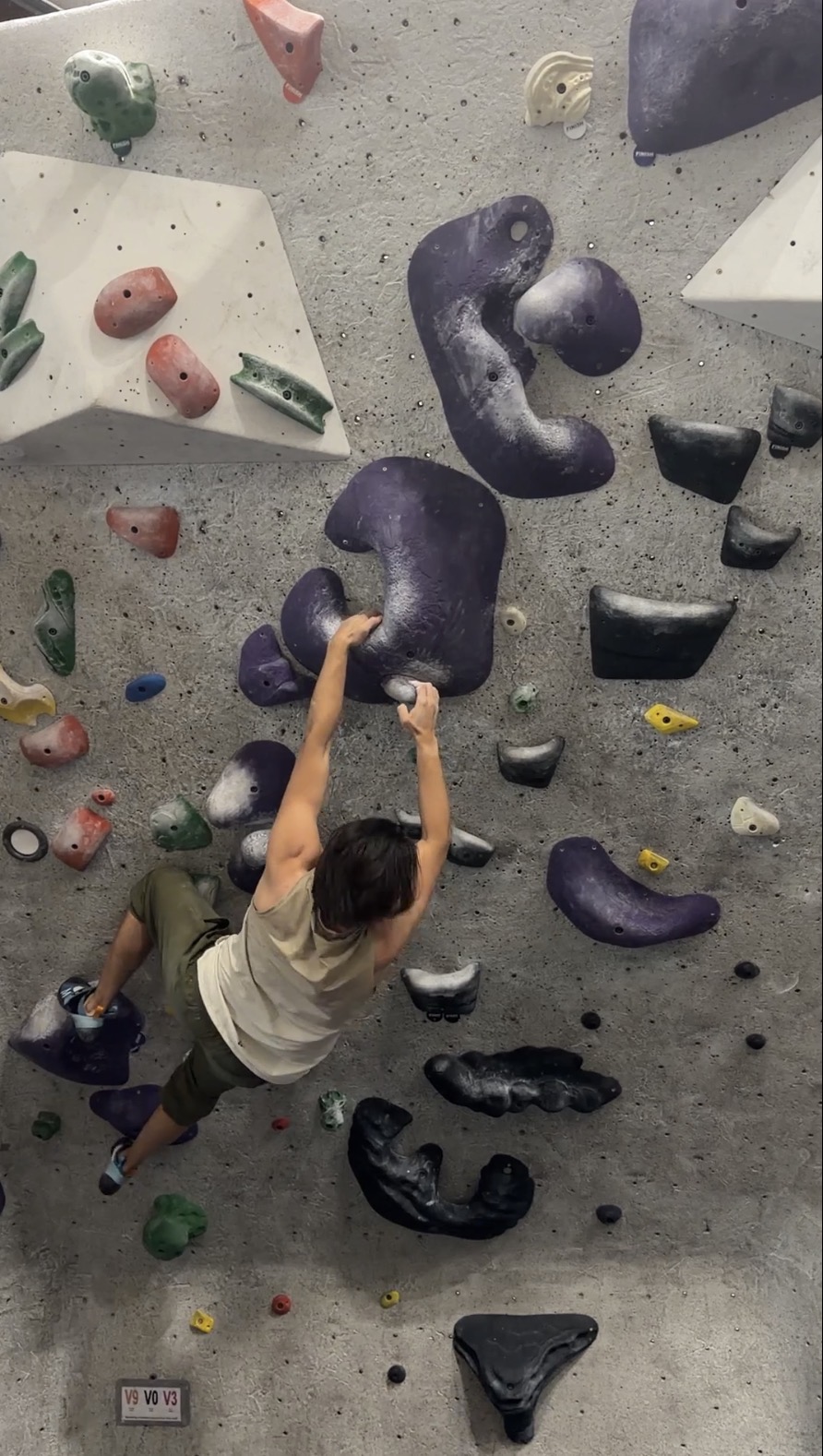
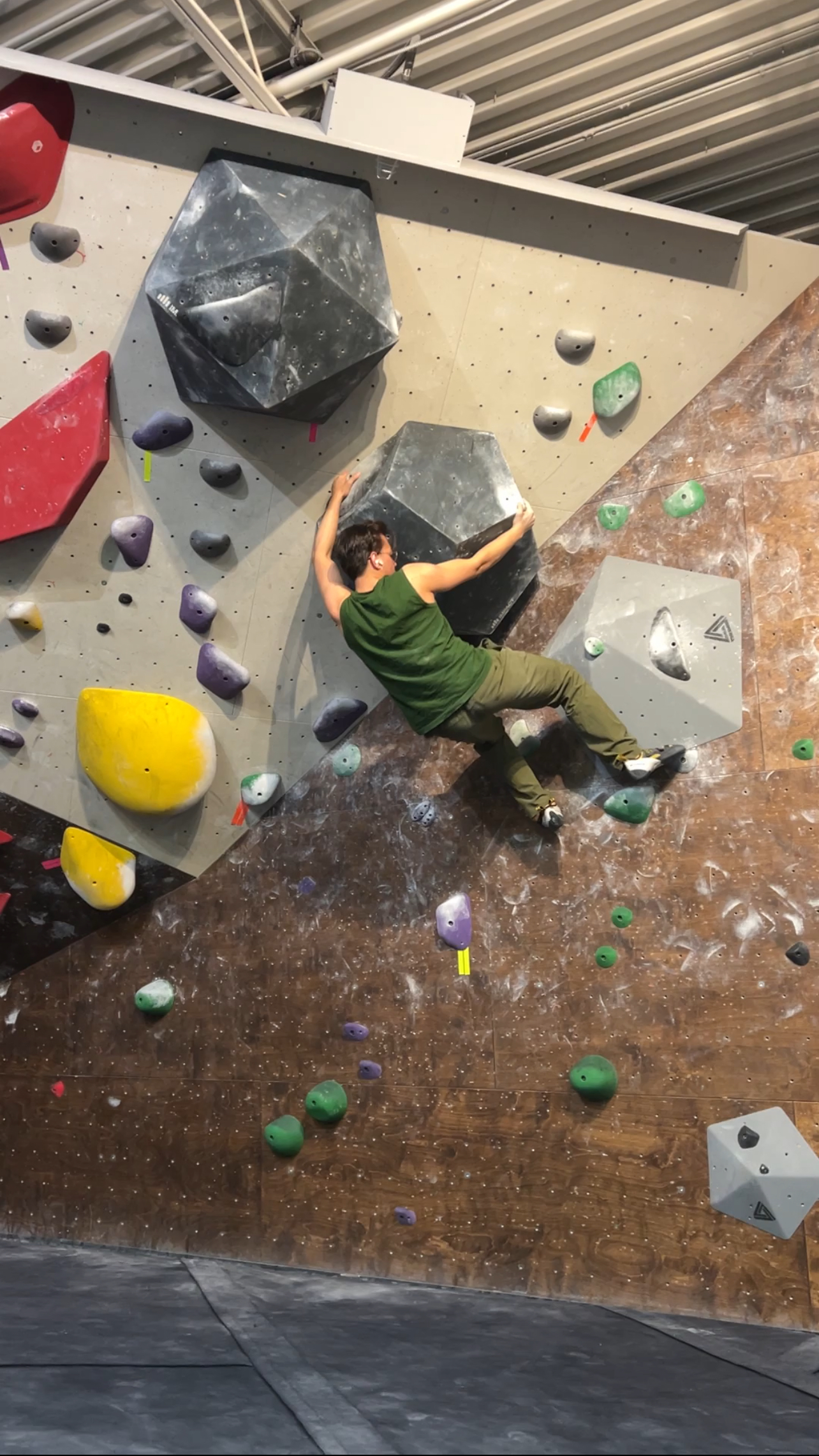
I’m ethnically Turkish, so yes I'm a big Iskender kebab enthusiast. Outside of engineering, I’m big on climbing (big is likely an understatement considering its what I live for), biking when I remember, running when I’m feeling brave, and lately: bargain-hunting for surprisingly good books at Indigo, recently bought one for $6 and is suprisingly good.

This website was built by me, painstakingly, by asking Claude and ChatGPT to write code and then learning enough CSS and HTML along the way so I could complain properly and edit it exactly how I wanted. I hate the term vibe coding cause, it ain't coding, it is AI doing it, let's be clear. With all that said and done, buckle up for some bugs and forget you have a phone ;)

Bera Bera Bera

Experience

Internships, research, and the hands-on work I’ve done so far.

01

Irradiant Technologies

Mechanical R&D Intern · Jan 2026 – Apr 2026 · Greater Boston, MA

02

Irradiant Technologies

Photolithography R&D Intern · Sept 2025 – Dec 2025 · Greater Boston, MA

03

Institute for Quantum Computing (IQC)

Quantum Photonics R&D Assistant · Jan 2025 – Apr 2025 · Waterloo, ON

04

Institute for Quantum Computing (IQC)

Quantum Photonics R&D Assistant · May 2024 – Aug 2024 · Waterloo, ON

Portfolio

A collection of projects showcasing design, analysis, and prototyping work.

Tip: Portfolio images are clickable — open any photo full-screen :).

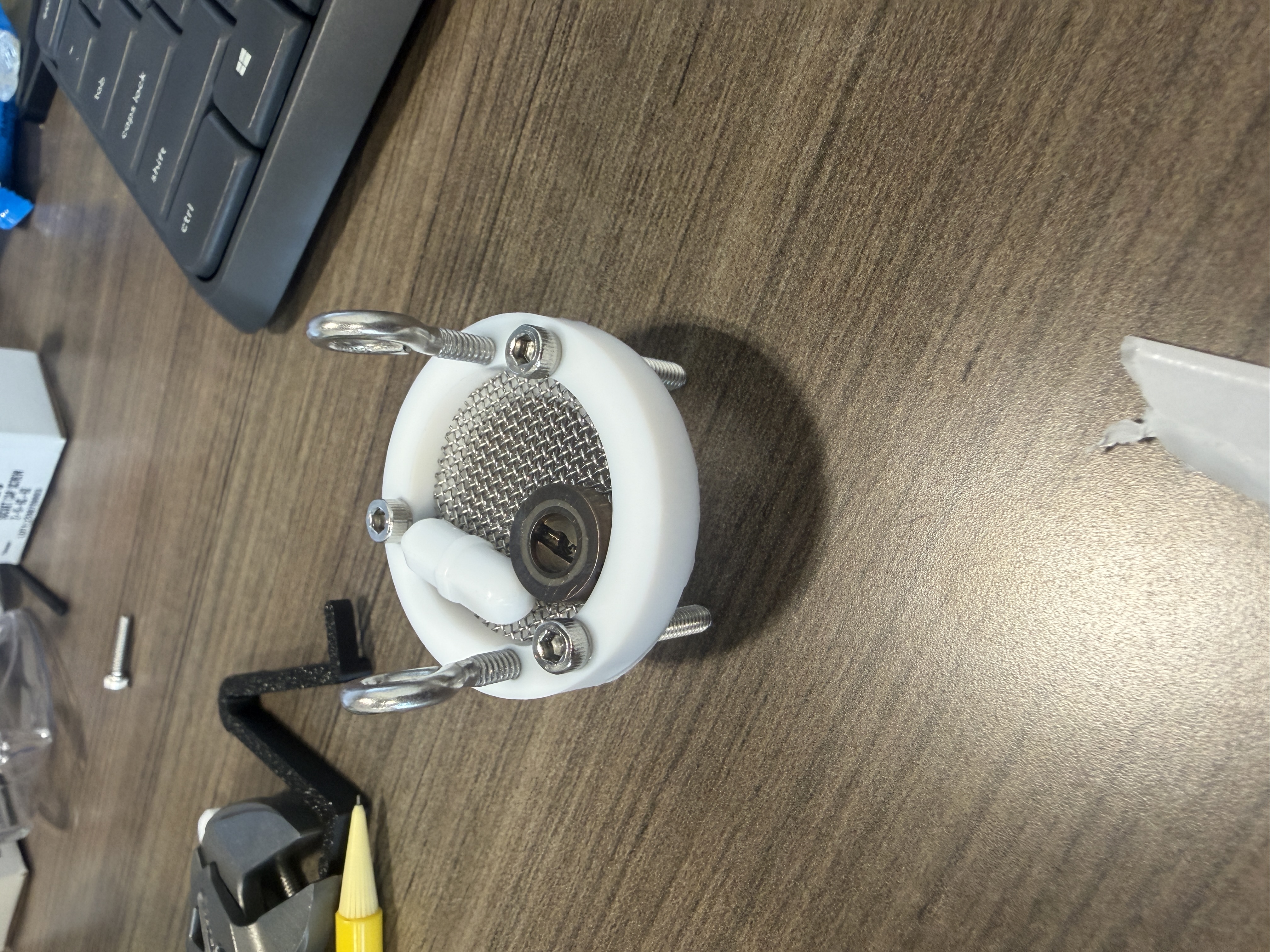
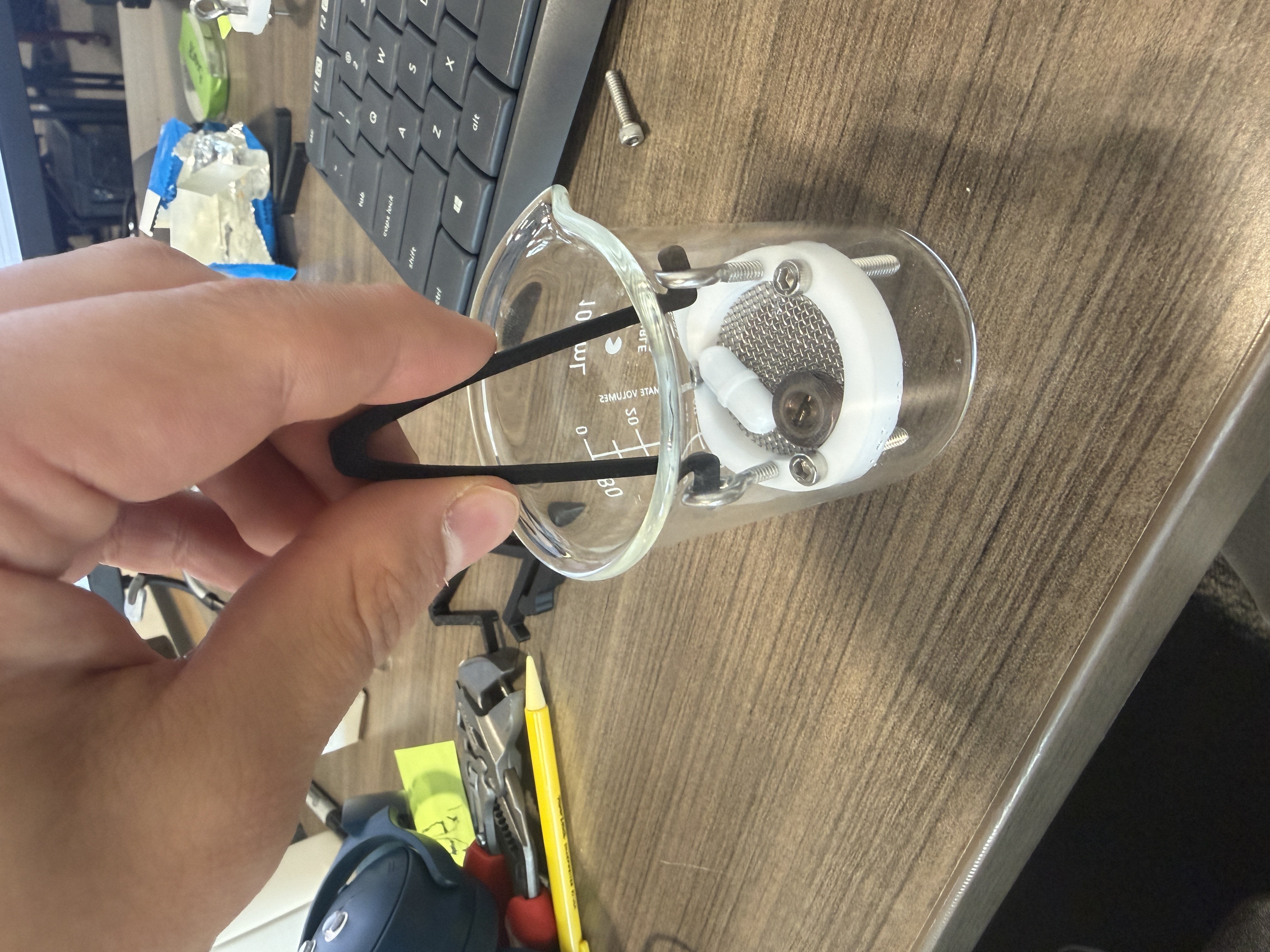
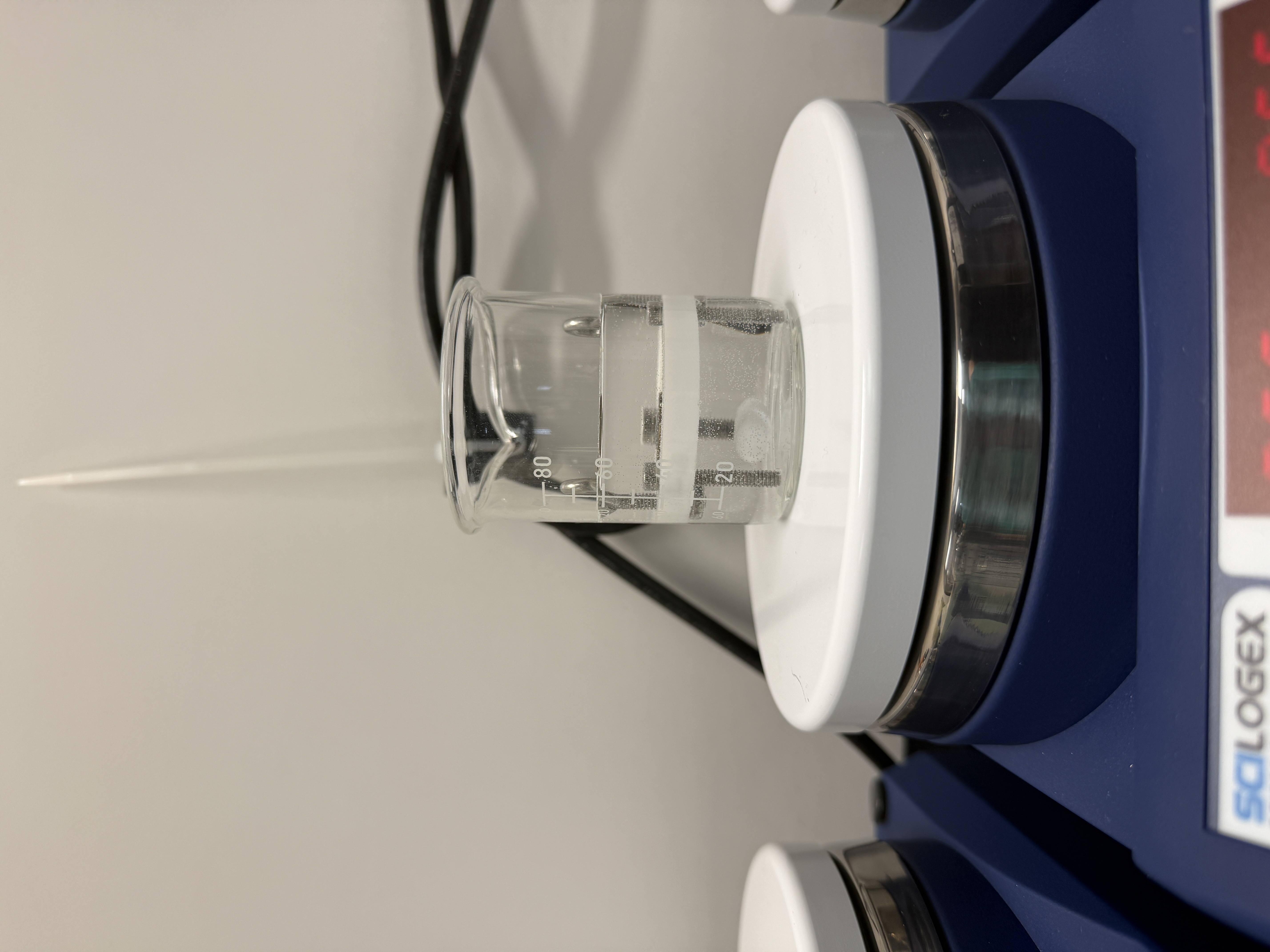
Elevated Agitation & Thermal Wash Platform

Lab Hardware · Agitation Systems · Chemical Compatibility

Designed and CNC machined a set of elevated thermo-agitation platforms to replace a previously manual washing workflow that relied on static solvent exposure. They are easy to assemble but most importanly, easy to use.

The system suspends samples above a rotating magnetic stir bar, enabling simultaneous heating and controlled convective agitation. This dramatically increased washing speed while ensuring uniform solvent contact from below.

Fabricated from a highly chemically resistant material, the platforms were engineered to withstand aggressive solvents and elevated temperatures while preventing degradation, contamination, and unwanted chemical interaction.

Problem Addressed

  • Manual washing required extended soak times
  • Residual solvent occasionally remained trapped beneath samples
  • Inconsistent agitation led to variability in cleaning performance

Design Objectives

  • Magnetic Clearance Optimization — Tuned elevation height for stable stir-bar coupling
  • Convective Flow Enhancement — Promoted active solvent circulation beneath samples
  • Chemical Resistance — Prevented swelling, leaching, or solvent attack
  • Contamination Control — Non-reactive, cleanable surfaces
  • Integrated Handling Tools — Designed chemically resistant tweezers as part of the wash system to enable safe, contamination-free sample transfer during heated solvent cycles

Impact

  • Significantly reduced wash time compared to manual soaking
  • Eliminated residual solvent retention beneath samples
  • Improved repeatability across batch treatments
  • Enabled faster turnaround in solvent-intensive workflows
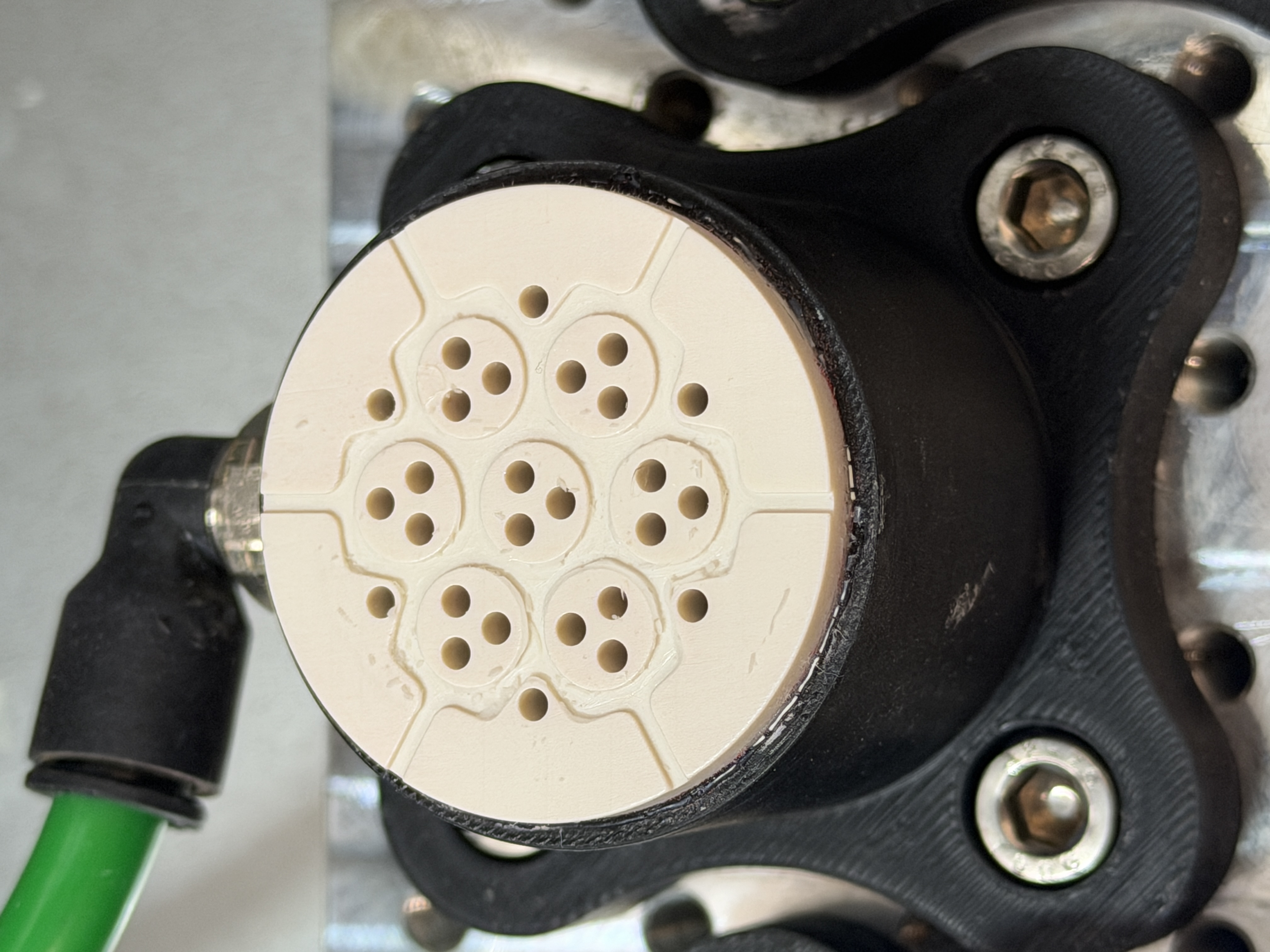
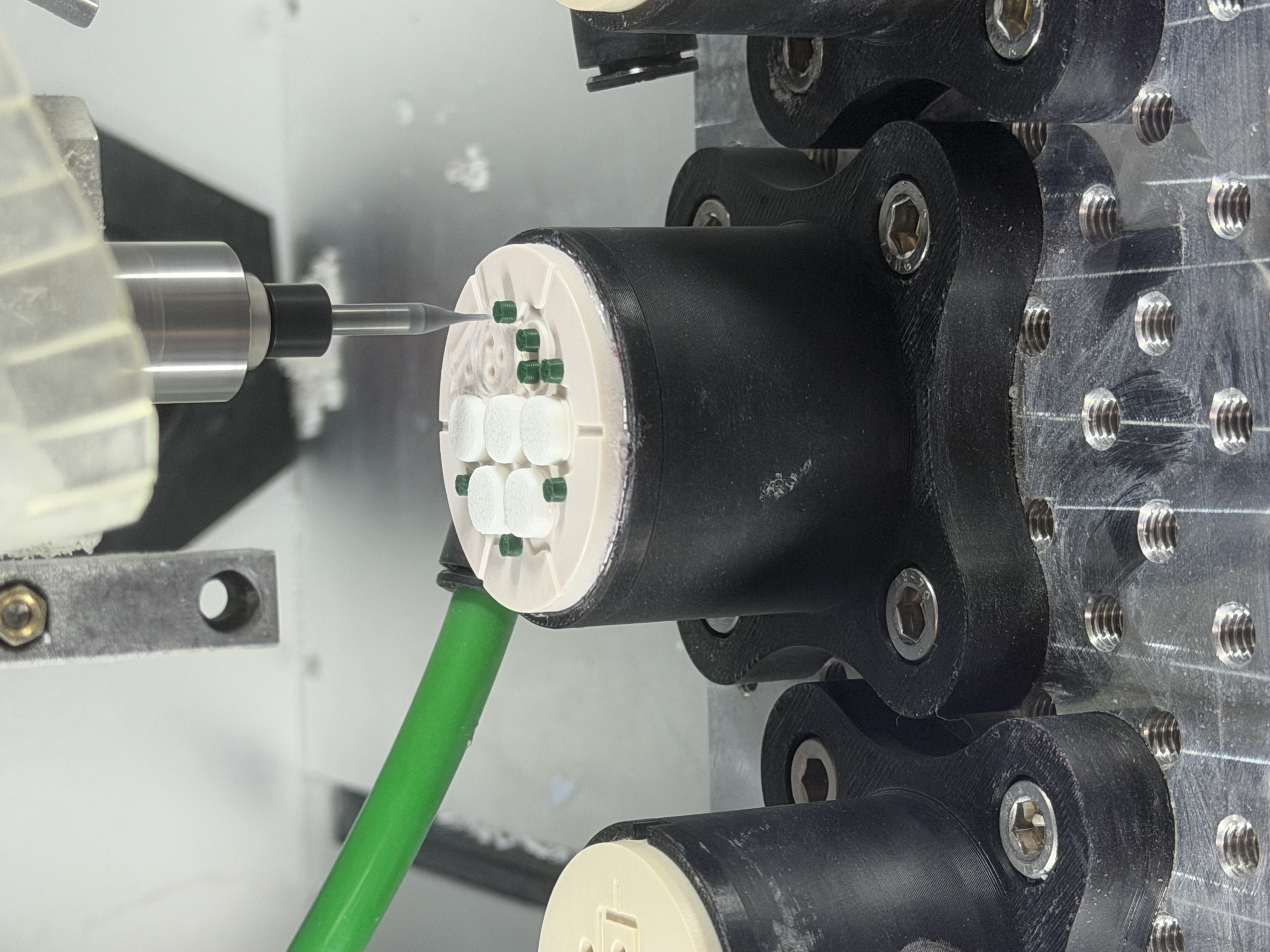
Custom Vacuum Chuck

CNC · Precision Fixturing · Vacuum Systems

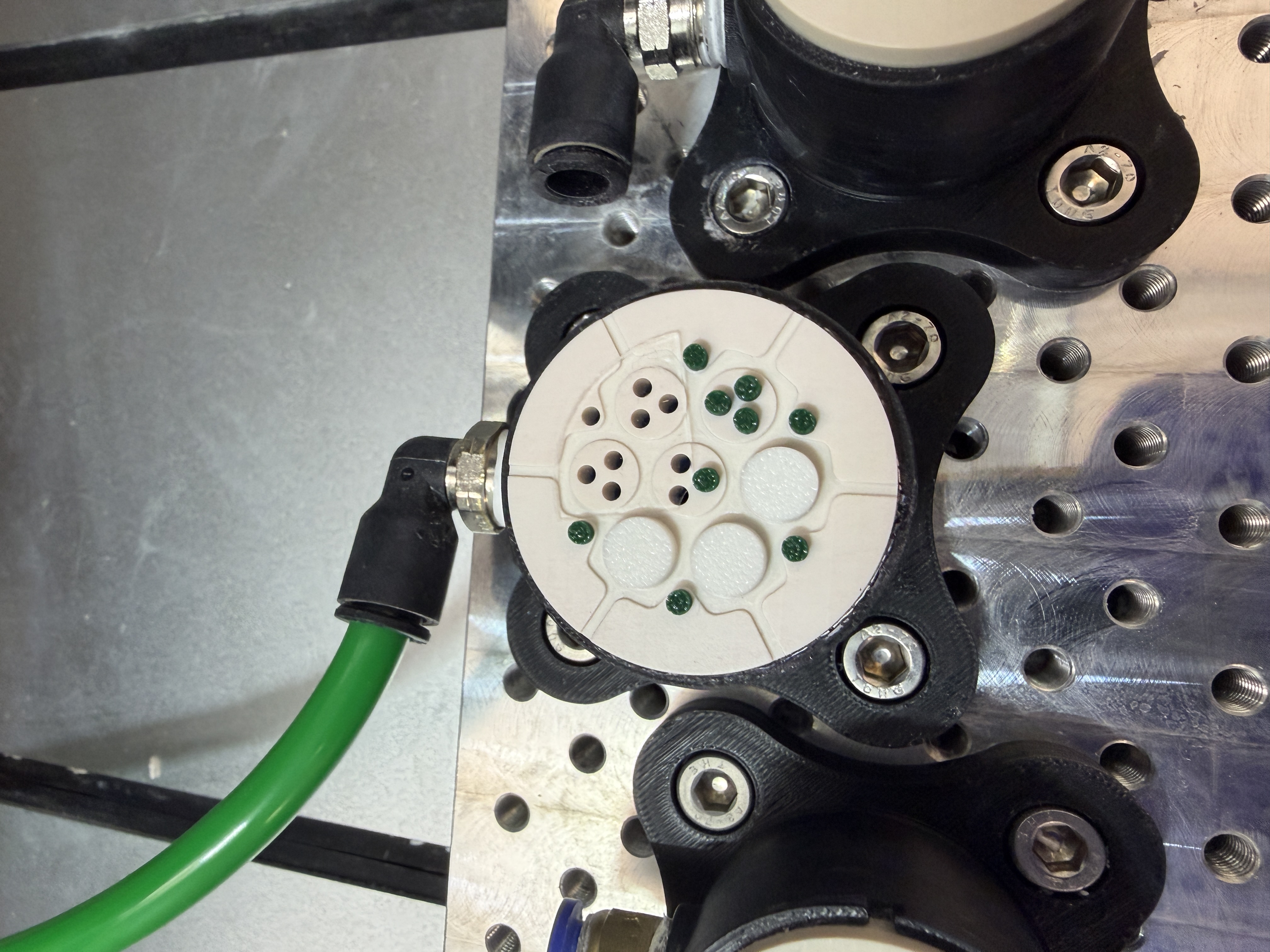
Designed and CNC-machined a custom vacuum chuck to securely fixture delicate, non-planar scaffold structures during precision machining and post-processing operations.

The system was engineered to provide repeatable clamping without mechanical distortion, enabling stable machining while preserving part integrity and surface quality.

Design & Engineering Approach

  • Vacuum Routing Strategy — Optimized internal channel geometry for uniform pressure distribution
  • Flatness & Runout Control — Tight tolerancing to maintain alignment during machining
  • Material Selection — Balanced machinability, rigidity, and surface durability

Manufacturing Process

  • CAM toolpath generation and machining strategy planning
  • 3-axis CNC milling and precision drilling operations
  • Surface finishing for sealing performance
  • Leak testing and vacuum integrity validation

Impact

  • Enabled distortion-free fixturing of delicate structures
  • Improved machining repeatability and part consistency
  • Reduced setup time compared to mechanical clamping methods
  • Created a reusable workholding platform for future process development

Two-Photon Lithography System

Metrology · CAD Reconstruction · Visualization

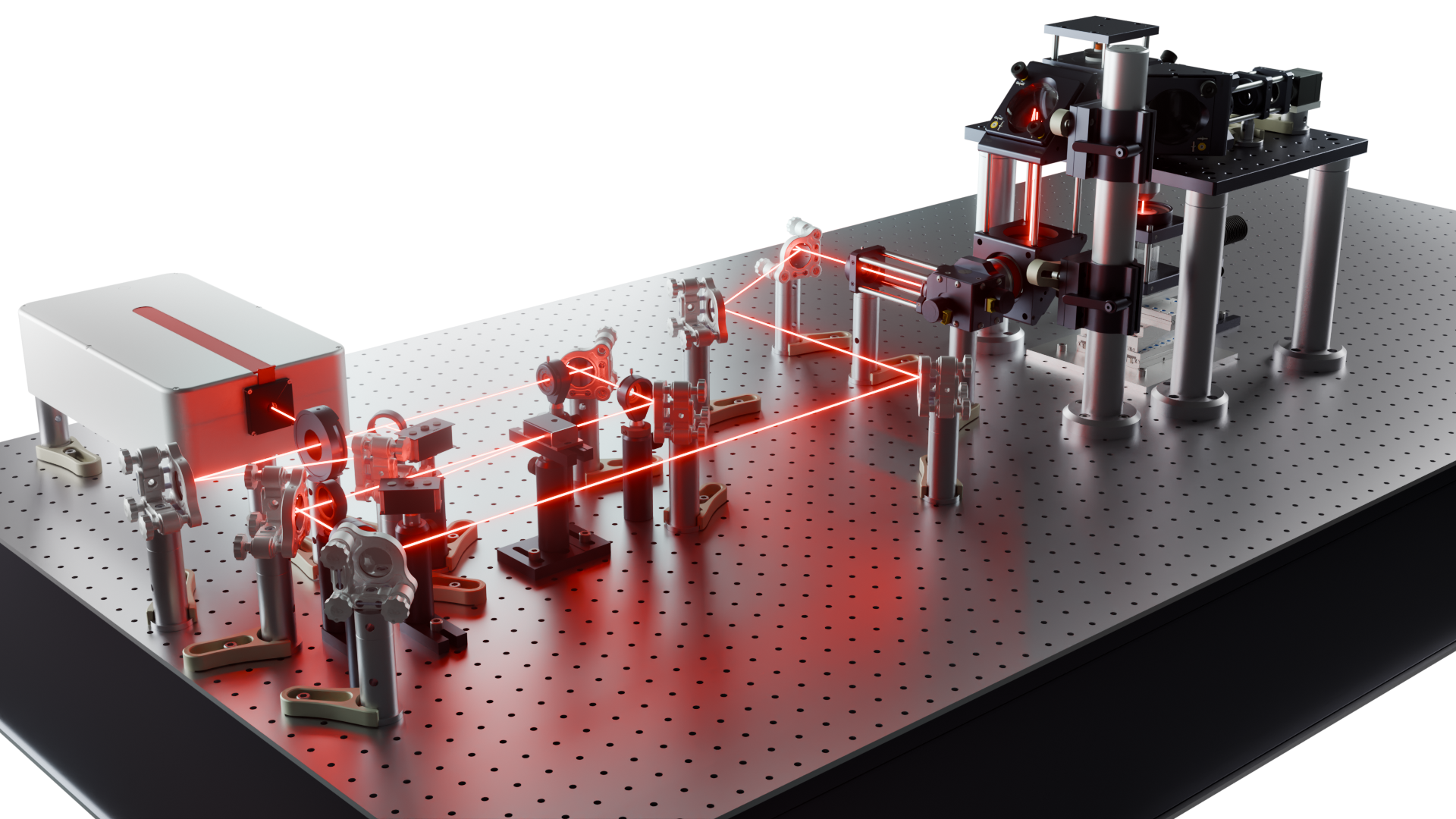
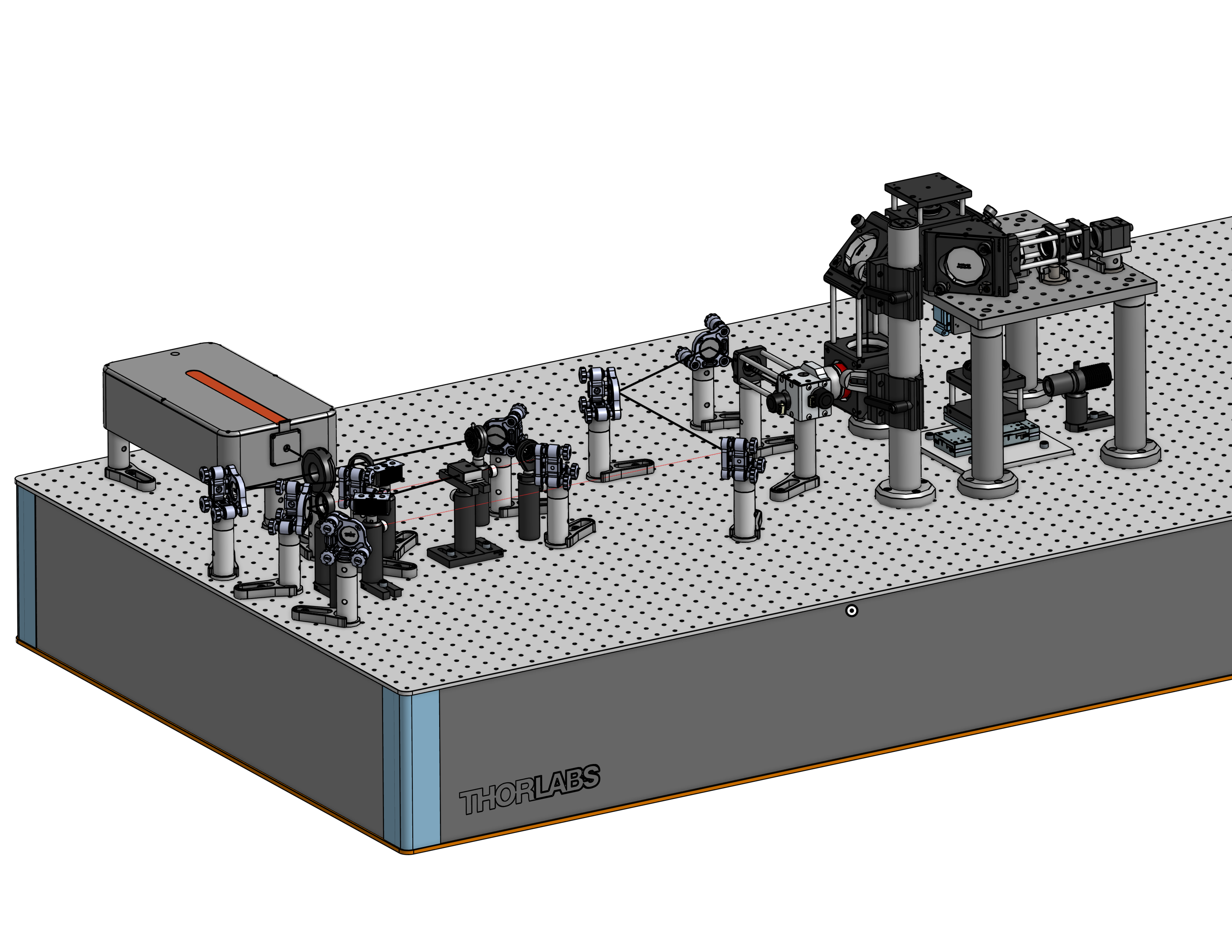
Developed a high-fidelity 3D CAD reconstruction of a two-photon lithography system by physically measuring the assembled hardware and rebuilding the full mechanical and optical architecture from scratch.

While I did not design the original system, I translated the real-world product into a dimensionally faithful digital model used for marketing visuals, technical communication, and internal documentation.

Modeling Process

  • Full-System Metrology — Precision dimensional measurement using calipers
  • Reverse Engineering — Structural frames, optics mounts, motion components
  • Parametric Reconstruction — Organized mechanical assemblies
  • Render Pipeline — CAD export and Blender integration

Technical Objectives

  • Maintain real-world dimensional correspondence
  • Preserve optical alignment geometry and positioning
  • Create clean, production-ready render geometry
  • Balance visual realism with modeling efficiency

Impact

  • Generated high-quality marketing visuals from engineering-accurate models
  • Enabled internal visualization without physical disassembly
  • Bridged mechanical design and visual communication
  • Produced reusable CAD assets for future documentation and iteration

Automated QD Characterization

Automation · Instrumentation · Data Pipeline

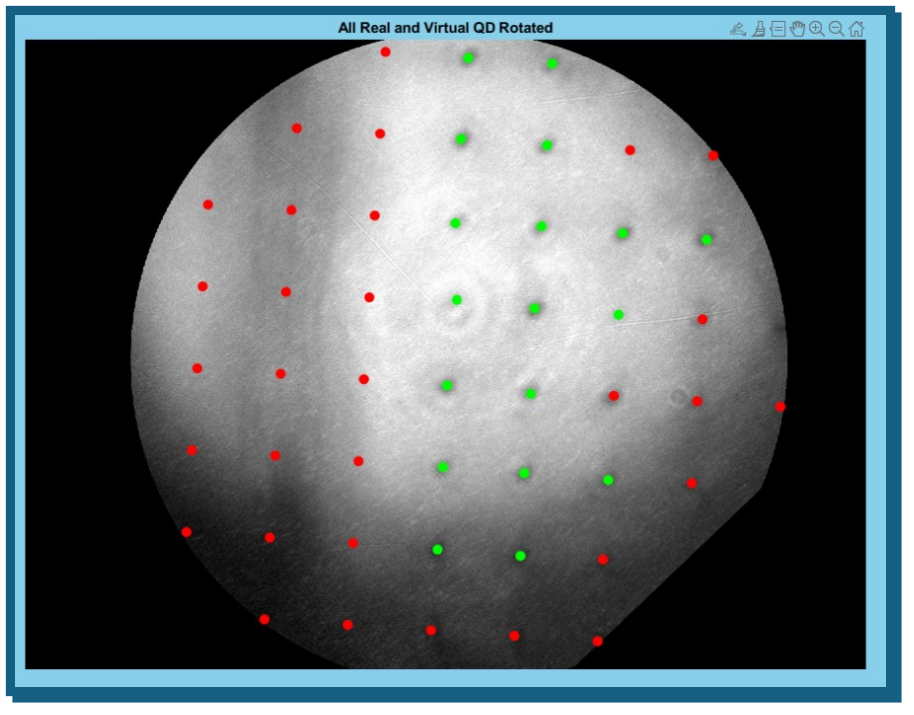
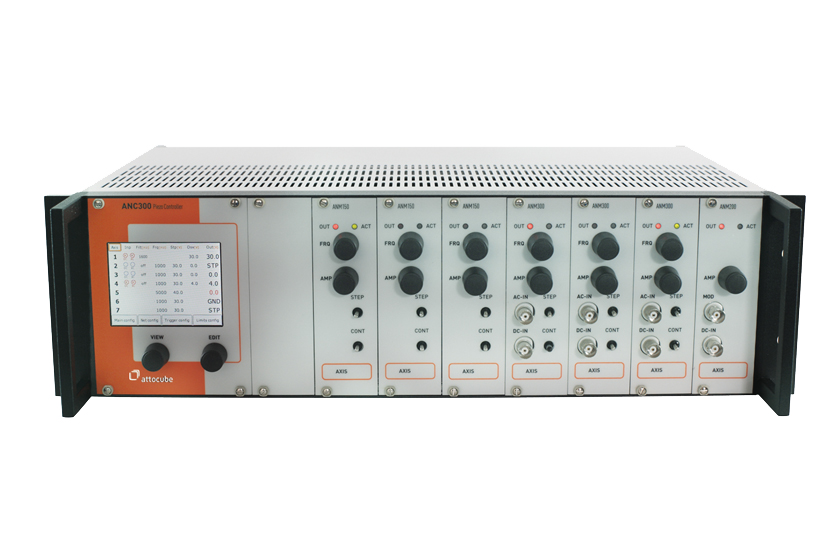
I developed a MATLAB-based automation platform to rapidly identify and characterize nanowire quantum dots (QDs) as candidate entangled photon sources for quantum repeater systems.

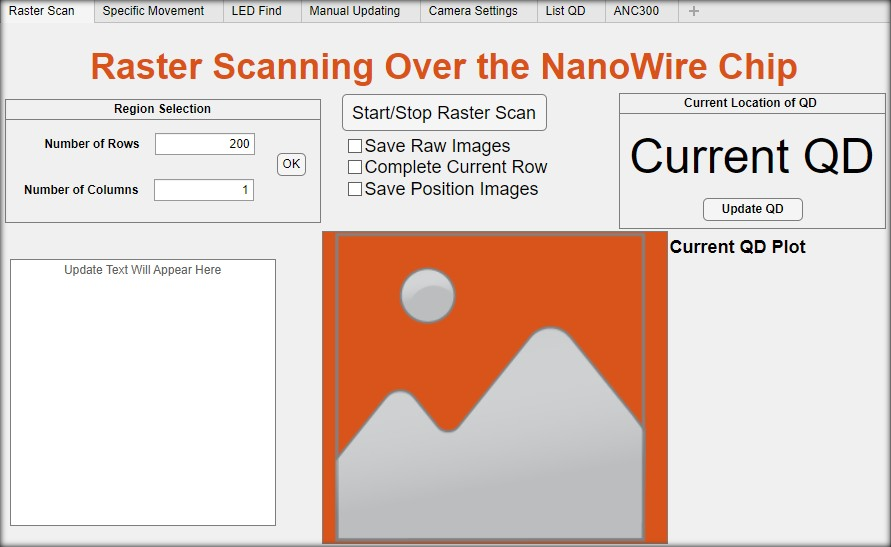
The NWQD Operating App integrates ANC300 piezo stage control, spectrometer acquisition, live imaging, and automated polarization sweeps into a unified experimental interface.

Control Architecture

  • Raster Scan — 200×200 automated grid navigation
  • Specific Movement — Direct QD targeting with calibrated scaling
  • LED Find — Centroid-based laser alignment detection
  • Batch Mode — Automated emission + FSS measurement sweeps

Performance Impact

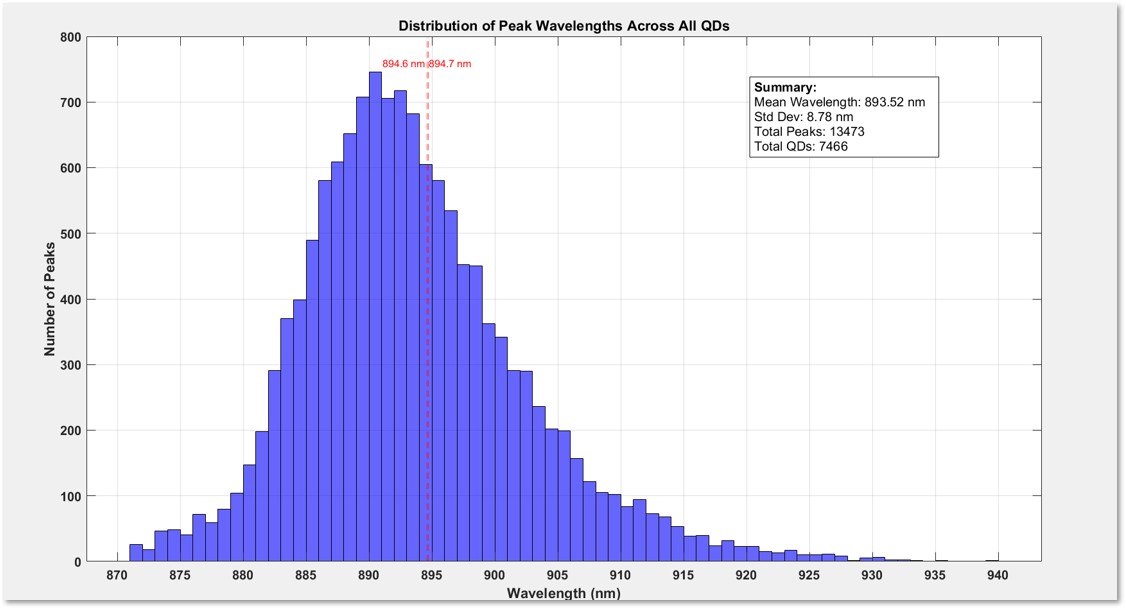
  • 7466 QDs analyzed across 50 columns
  • Automated peak detection + cosine-fit FSS extraction
  • ~200× throughput improvement vs. manual workflow

Carvera Tool Wear Inspection Fixture

CNC Machining · Metrology · Inspection Tooling

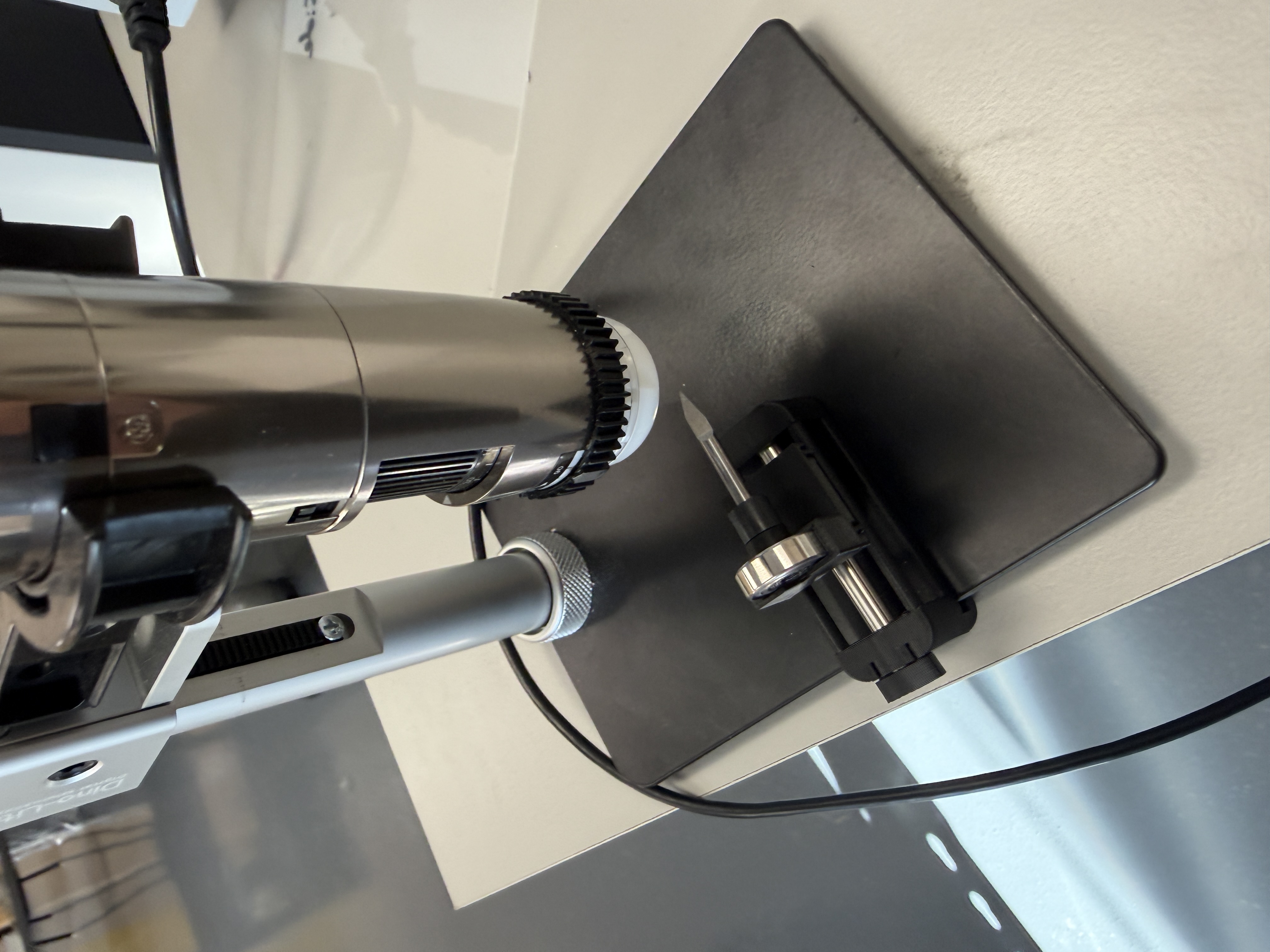
Designed and fabricated a microscope-mounted inspection fixture for evaluating CNC cutting tool condition used on the Carvera desktop CNC machining system. The fixture enables rapid inspection of cutting tool tips under magnification, allowing precise evaluation of edge wear, chipping, and tool dullness after machining cycles.

The system clips directly onto an AmScope microscope base and integrates a linear sleeve bearing for smooth lateral positioning with a ball bearing rotational stage that allows the cutting edge to be examined from multiple orientations. This dual-axis motion enables precise alignment of the tool tip beneath the microscope while maintaining stable positioning during inspection.

All structural components were custom CAD-designed and 3D printed, allowing rapid iteration and tight integration with the microscope platform. The mechanical system intentionally minimizes hardware complexity, relying on only a small set of components: a sleeve bearing, a ball bearing, and a precision metal rod serving as the guide shaft for the linear motion stage.

Within the machining workflow, cutting tools are typically replaced after machining approximately five scaffold components to ensure consistent surface finish and dimensional accuracy. The inspection fixture provides a rapid verification step that allows operators to confirm tool condition before replacement, improving workflow efficiency while maintaining machining consistency.

Problem Addressed

  • Manual inspection of micro cutting tools was inconsistent and difficult to repeat
  • Precise alignment of tool edges under a microscope required awkward repositioning
  • Frequent tool replacement during scaffold machining created workflow inefficiencies

Design Objectives

  • Precise Tool Positioning — Linear sleeve bearing provides smooth X-axis positioning
  • Controlled Rotational Alignment — Ball bearing enables full-edge inspection
  • Rapid Prototyping — Custom 3D printed components allow fast iteration
  • Minimal Hardware Architecture — Only sleeve bearing, ball bearing, and guide rod required

Impact

  • Enabled consistent microscope-based inspection of CNC tool edges
  • Improved confidence in tool wear assessment
  • Reduced unnecessary tool replacements
  • Improved efficiency in scaffold machining workflow

High-Pressure Chemical Processing Scaffold Holder

Mechanical Design · Materials Engineering · Process Integration

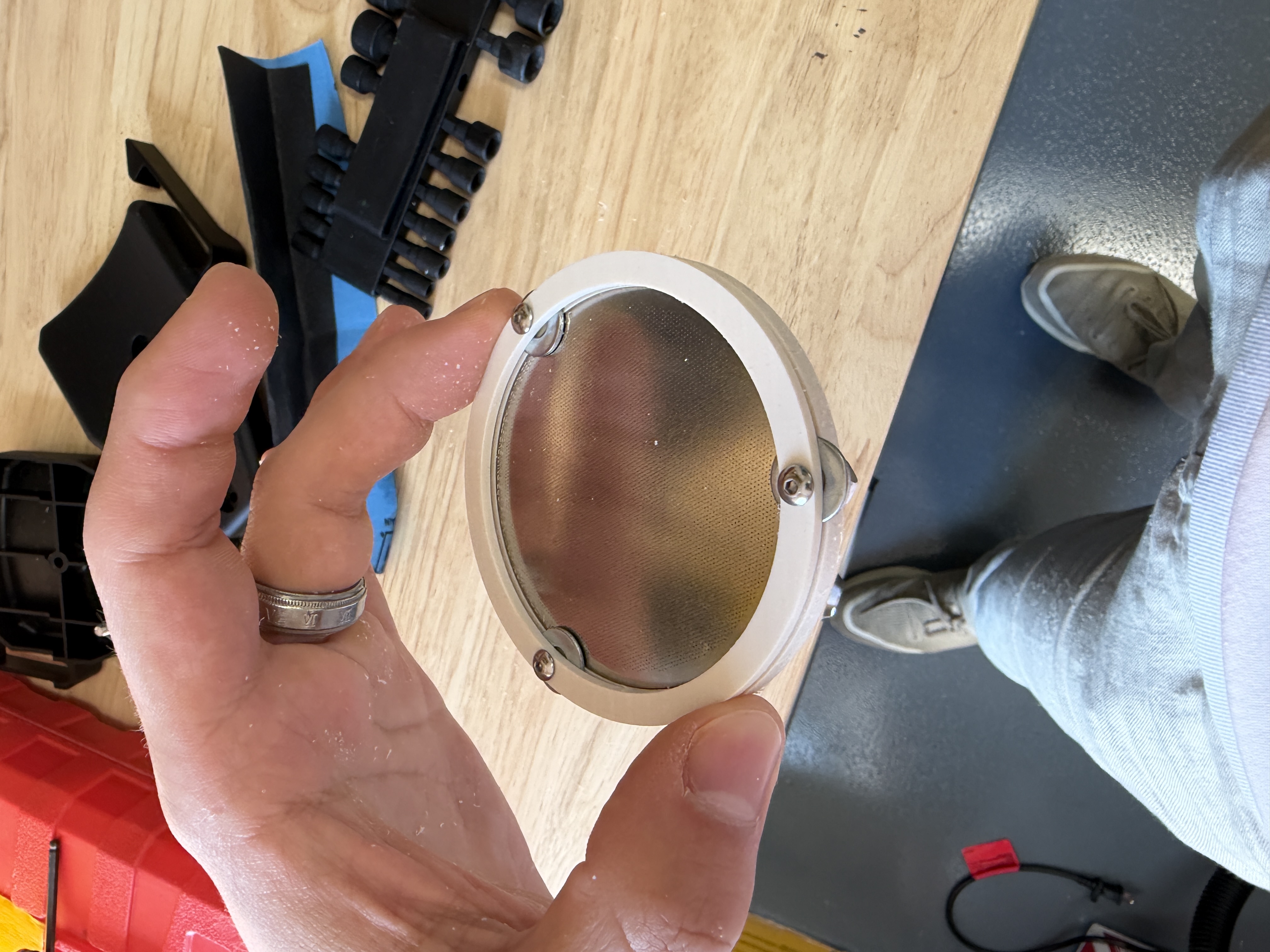
Designed and fabricated a specialized holder for proprietary scaffold materials used in a high-pressure, chemically aggressive processing environment. The system enables reliable handling, identification, and protection of delicate scaffold structures throughout multi-step processing cycles.

The holder incorporates an asymmetrical identification geometry, allowing unambiguous orientation and scaffold identification within enclosed processing chambers where visibility and access are limited. This improves consistency during loading, retrieval, and downstream handling.

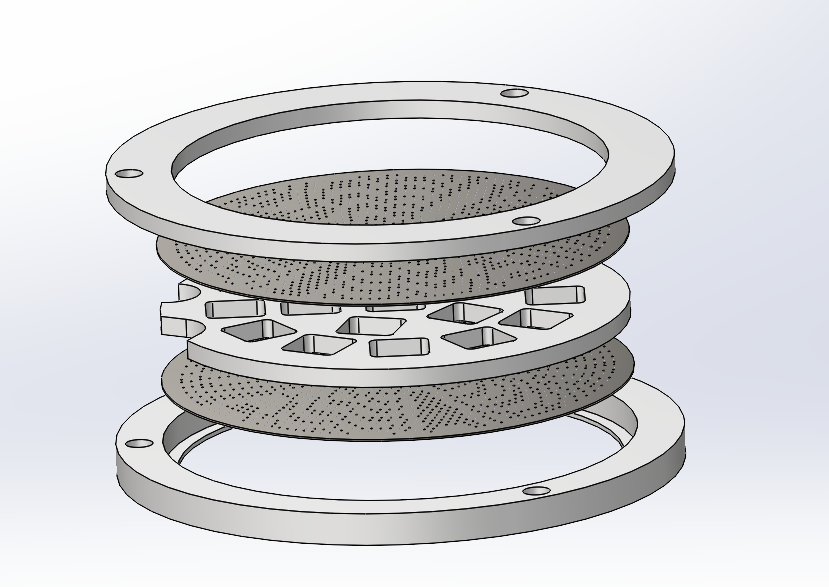
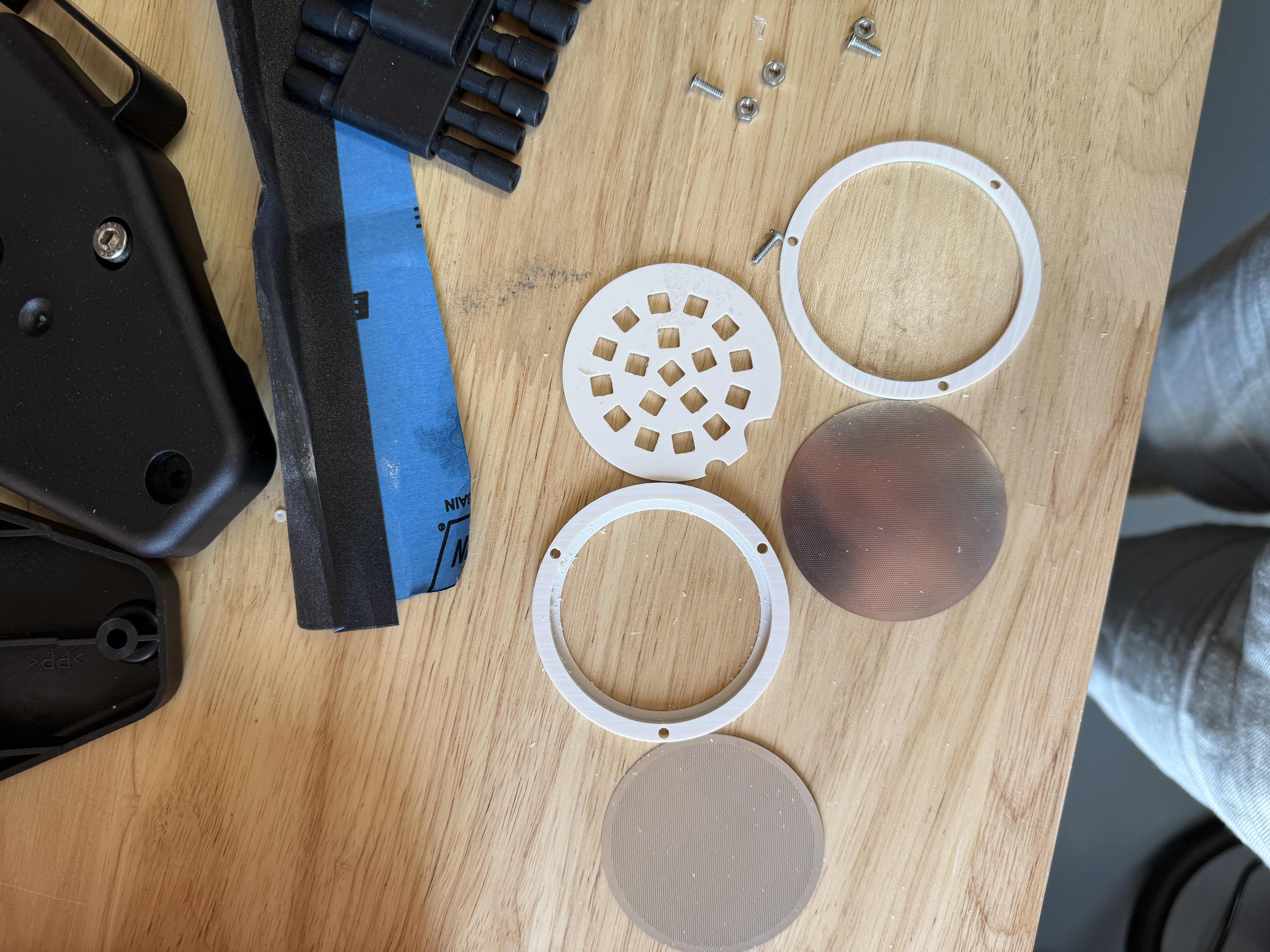
The assembly was engineered from a chemically inert, high-performance material selected to withstand extreme chemical exposure, elevated pressure, and repeated process cycling without degradation, swelling, or contamination. A layered construction using retention rings, fine mesh, and a support plate allows secure containment while maintaining fluid access throughout processing.

Problem Addressed

  • Difficulty identifying scaffold orientation in enclosed or low-visibility chambers
  • Material degradation of standard holders under aggressive chemical exposure
  • Inconsistent scaffold retention during high-pressure process steps
  • Risk of contamination from incompatible fixture materials

Design Objectives

  • Asymmetric Identification System — Geometry-based orientation feature for reliable scaffold tracking
  • Chemical Resistance — Material selection tailored for aggressive solvent and reagent compatibility
  • Pressure Stability — Structural integrity maintained throughout elevated-pressure workflows
  • Modular Layered Assembly — Retention rings, mesh, and support insert designed for cleaning and repeatable assembly
  • Process Accessibility — Secure part retention while preserving full fluid exchange during processing

Impact

  • Enabled reliable scaffold orientation and identification during chamber processing
  • Improved repeatability across handling and post-processing steps
  • Eliminated fixture compatibility issues in chemically aggressive workflows
  • Created a reusable and robust holder for repeated high-pressure process cycles

Contact & Resume

Let's Connect

Interested in collaboration, opportunities, or just want to chat about mechanical design? I'd love to hear from you.

Contact Information and Useful Links :)